The Deal with SOVT
Dec 04, 2025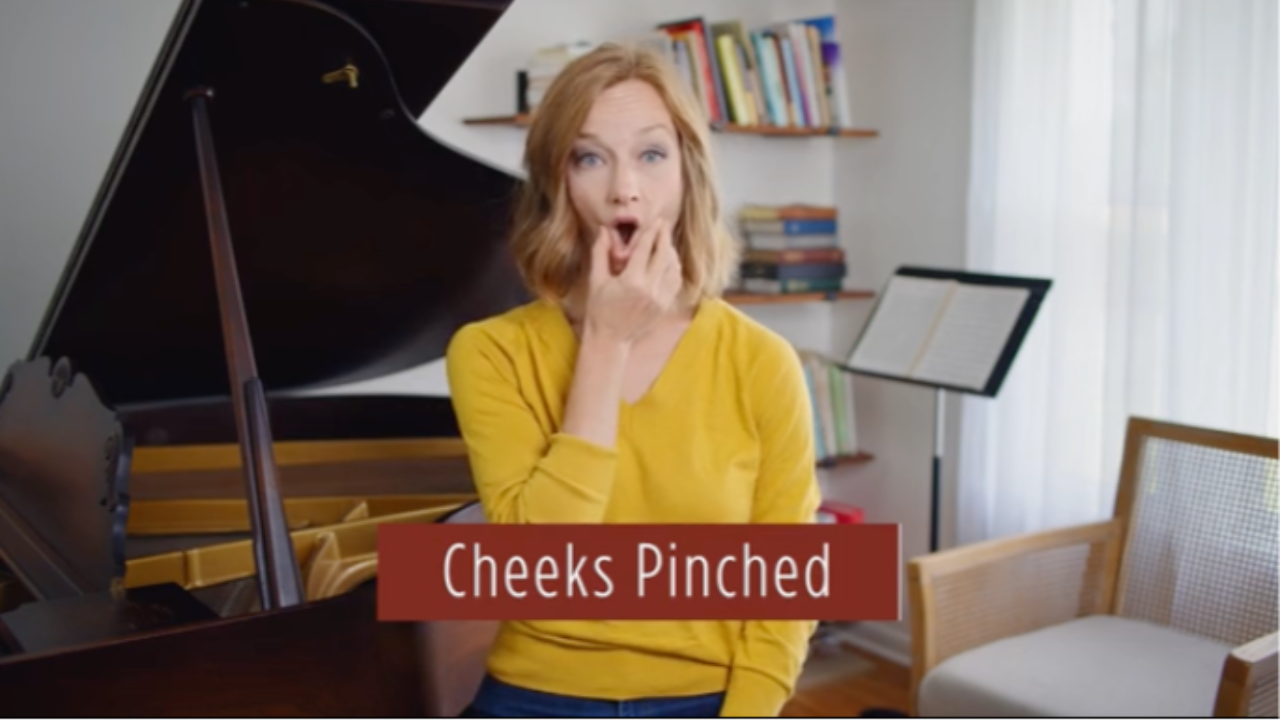
Ever heard of SOVT exercises? ....Do you even know what that means?😬
It’s, get ready…semi-occluded vocal tract exercises...
I.e., party-closed vocal tract exercises.
Because slightly closing the vocal tract helps the vocal folds approximate, vibrate, and help to create sound. In short, semi-occlusion helps balance your sound.
They are ALL over the internet. It’s kinda ridiculous really.
Some say SOVT stuff is new, but they’re wrong.
Any kind of vocalizing you do with a mouth that isn’t gapingly wide open is a semi-occluded vocal tract exercise.😲
Womp womp.🤦🏼♀️
Lip trills, hums…that’s all SOVT. And that’s been around for ages.
But in our lifetime, Ingo Titze, a pretty cool scientist, is credited with the SOVT trend, by way of the straw.🥤
I wouldn’t recommend doing so now, but after this article, you can take 5873 hours on Youtube and watch straw exercises. You can even spend a lot of money (for a straw!) to get the coolest new trend in singing.
Or perhaps after you get done here, you won’t want to waste your time.
Straw work - particularly when blowing bubbles - can be a good way to recover from vocal damage, injury, or extreme impairment (laryngitis, strep, etc.).
But beyond those circumstances, I’ve had to undo subsequent issues with singers who have used the straw a lot, and I think that can all be avoided.
Think about what your face does when blowing through a straw…
- Jaw tightens
- Lips tightened
- Jaw stays in a fixed position
- Tongue doesn’t move
There are soooo many muscles that need stretching and moving that are involved with the tongue and the jaw, and they get tight if they don’t get to stretch and move.
So singers who have been doing a lot of “SOVT” come into my office with a lot of excess tension.
To avoid all that, friend, just sing with your cheeks pinched. It’s that simple.
Like in the picture below:
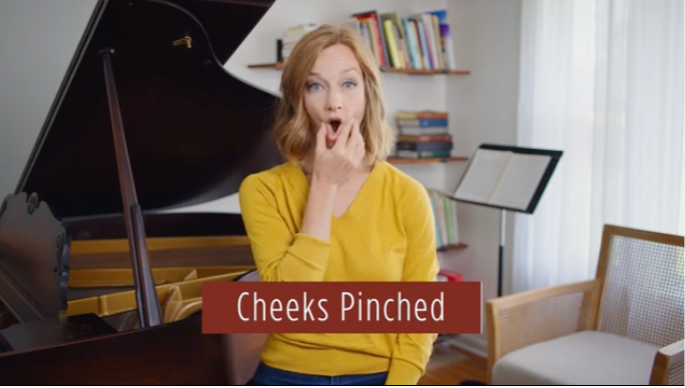
This is sem-occluded, AND it allows your tongue to move and your jaw muscles to stretch. It gives more room for all the laryngeal and oral muscles to move around, stretch, and respond to what you want as the singer.
Humming and lip trilling can also be helpful, but again, the jaw tension and lack of tongue flexibility….pinching your cheeks works better, in my opinion.
I know it’s easy to do a quick Youtube search, find some SOVT exercises, and get to work.
I want you to be smarter than that. 😘
Sing (anything) with your cheeks pinched, and you’ll yield the a better result in less time. #efficiency
Lorem ipsum dolor sit amet, consectetur adipiscing elit. Cras sed sapien quam. Sed dapibus est id enim facilisis, at posuere turpis adipiscing. Quisque sit amet dui dui.
Stay connected with news and updates!
Join our mailing list to receive the latest news and updates from our team.
Don't worry, your information will not be shared.
We hate SPAM. We will never sell your information, for any reason.